



What Berlin made visible about new spaces for art, business and cultural transformation
An intense art trip with an echo: Sonja Dolzer was together with Cordelia Lehmann-Reinthaller and Lukas Dolzer on the road in Berlin - at the paper positions berlin at Tempelhof Airport, as part of the Gallery Weekend Berlin, at the ART Talks at the Neue Nationalgalerie, KaDeWe and Hamburger Bahnhof - Nationalgalerie der Gegenwart.
What remained was more than just a travel impression. Over the weekend, Berlin became a dense network of fair, gallery, museum, discussion, market and public space - and thus a resonating space for questions that have occupied BURN-IN for years: What spaces does art need today? How does presentation become participation? And how can art, strategy, sustainability, brand and social development be effectively combined?
Paper Positions 2026 Berlin
The power of concentration. How a focused exhibition format of paper, drawing and materiality creates a strong resonance space.
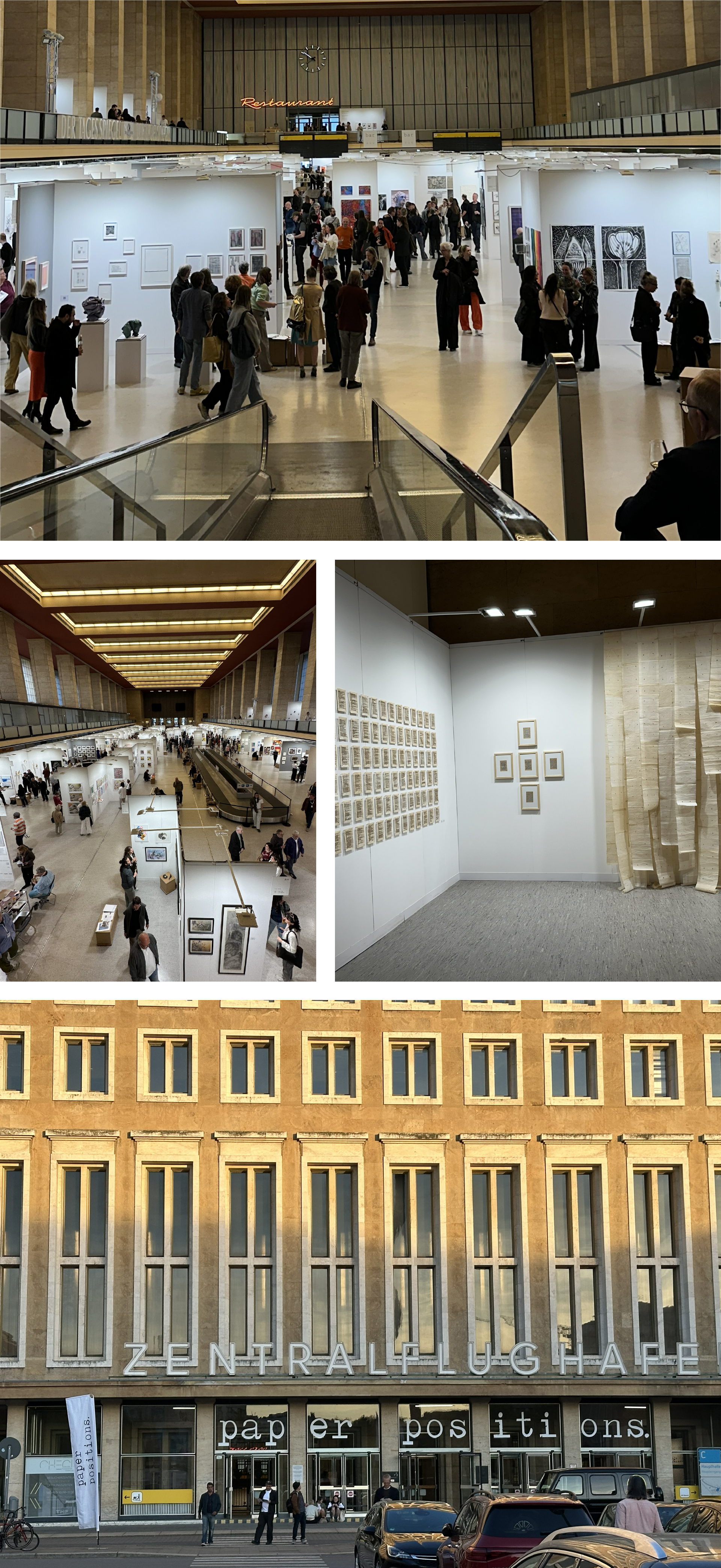
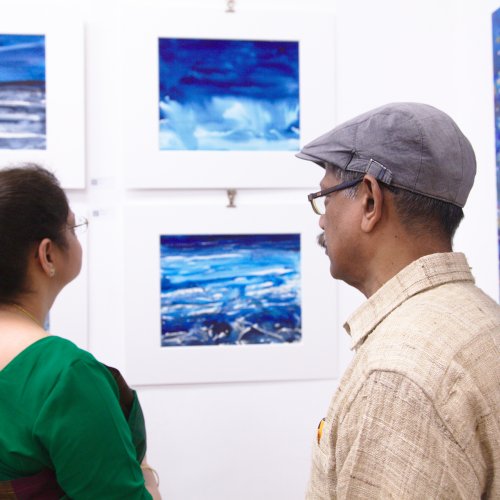
Impressions from Paper positions Berlin | Tempelhof Airport
The paper positions berlin showed at Tempelhof Airport how powerful a focused exhibition format can be. Paper, drawing, materiality and handwriting were not read as restrictions, but as curatorial condensation. It was precisely the concentration on one medium that opened up a broad scope: for quiet positions, precise settings, intensive discussions and new encounters.
More than 16,000 visitors made it clear that clearly profiled formats can also develop relevance on the market side. At a time when the art market is constantly being critically questioned, Berlin showed that quality, atmosphere and a recognizable profile remain viable arguments.
The city as a stage for art | Gallery Weekend Berlin
When galleries, department stores and public paths become resonating spaces for encounters.
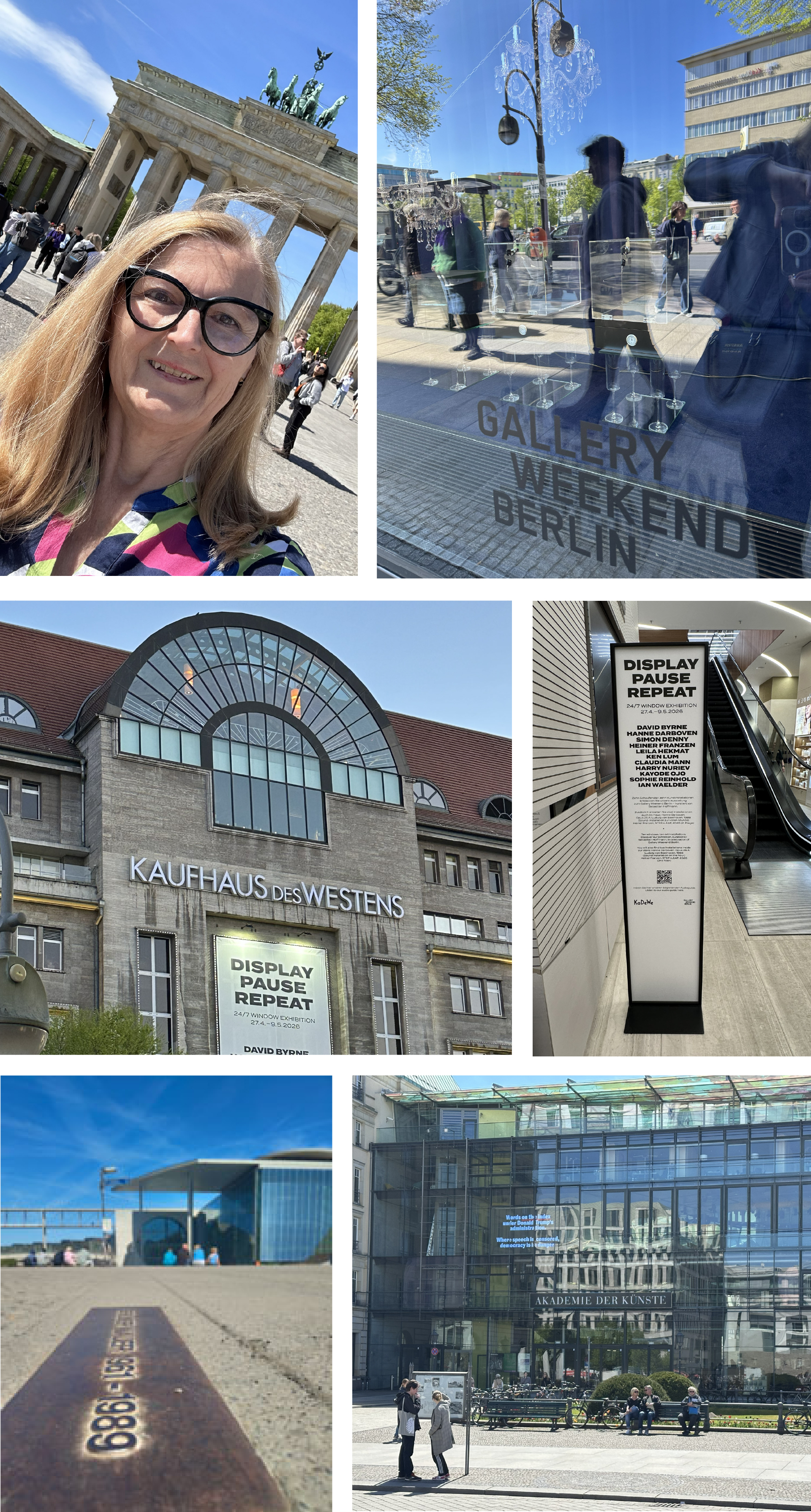
Impressions KaDeWe Berlin | Display, Pause, Repeat
The Gallery Weekend Berlin opened up the city as a polyphonic art parcours. Galleries, satellites, collectors, artists, paths and conversations combined to form a choreography of attention. Art took place not only in individual rooms, but between them - in walking, comparing, meeting again, in brief exchanges at the next station.
This quality was also evident in another location: at KaDeWe with DISPLAY, PAUSE, REPEAT. The traditional Berlin luxury department store gave its shop windows over to art - consistently without products, without a classic presentation of goods. Showcases became artistic spaces in the public urban space.
For BURN-IN, this was precisely where a special resonance lay. Our years at Gerngross have also shown how powerful art can be when it not only reaches an informed gallery audience, but also encounters people in the midst of their everyday lives. Between architecture, consumption, curiosity and the public, other forms of attention are created - more low-threshold, more surprising and sometimes precisely for this reason more sustainable.
Berlin thus showed art not as an isolated event, but as an urban network: as an interplay of gallery, city, department store, audience and movement.
Discourse space future
Where institution, market, technology and new publics negotiate the future of the art system.
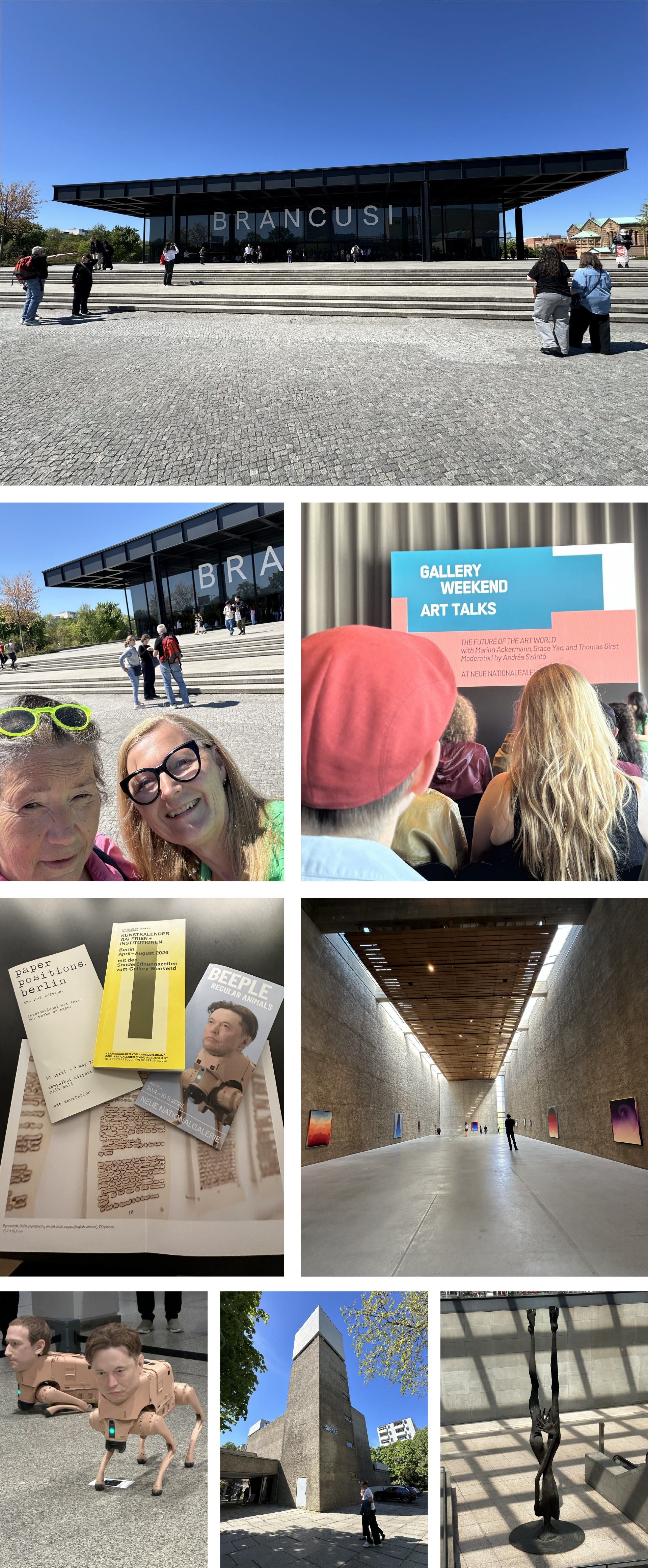
Impressions of the ART Talks at the Neue Nationalgalerie in Berlin
The ART Talks at the Neue Nationalgalerie were particularly informative. At the talk "The Future of the Art World", it became clear how much the art system is shifting between institution, market, technology and new publics. At Beeple in conversation with Lisa Botti, the question of how digital imagery, AI, NFTs and social media are no longer outside the museum, but are helping to shape its present, came to the fore.
For BURN-IN, this level was particularly valuable. After all, our work also operates at interfaces: between gallery and agency, between art and communication, between cultural attitude and strategic development.
Material, brand and participation
Chanel Commission. How 400,000 wooden cubes, music and movement translate a brand into a shared experiential space.
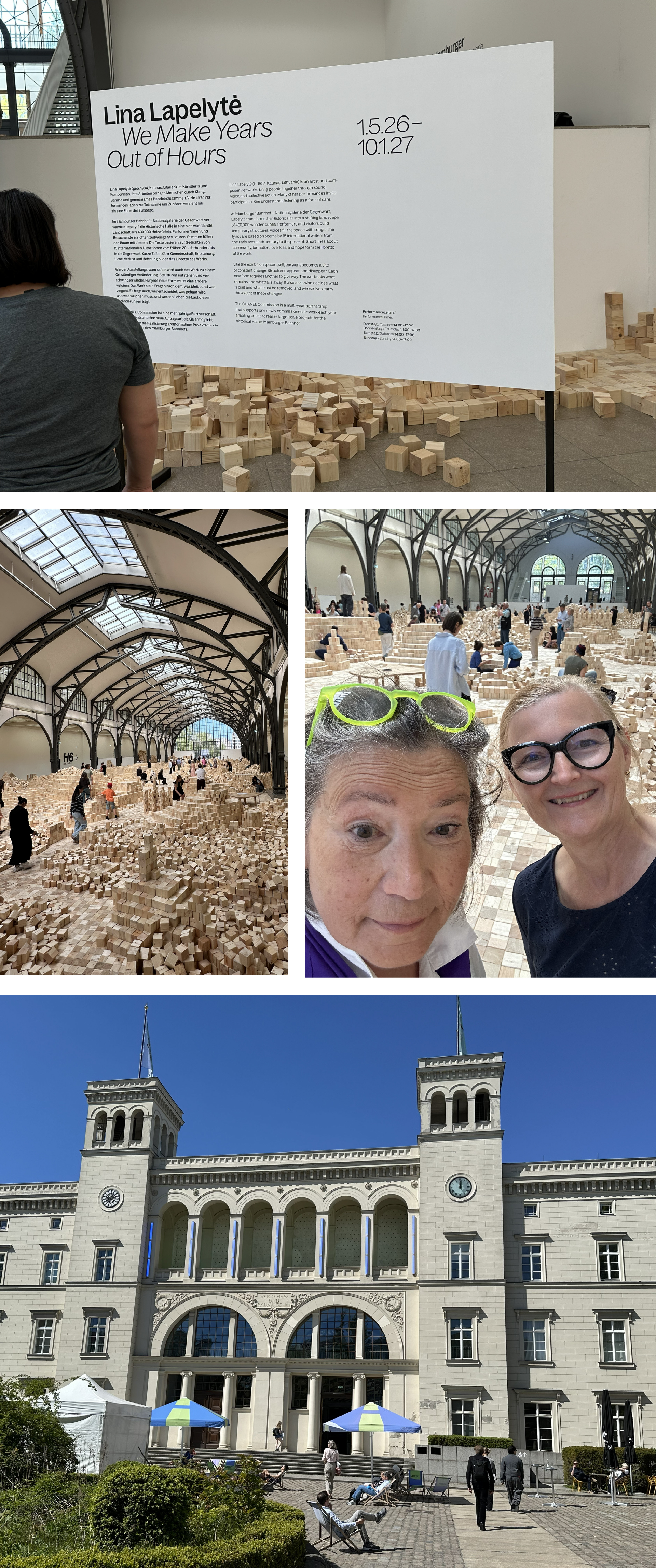
Impressions Chanel Commission Lina Lapelytė at Hamburger Bahnhof
A special echo was left by the CHANEL Commission by Lina Lapelytė at Hamburger Bahnhof: 400.000 wooden cubes, music, voices and movement transformed the historic hall into a participatory space.
The change of material was also remarkable: CHANEL, traditionally associated with fabric, fashion and the body, opted for wood here - a material of nature, time, layering and transformation. Many individual elements were not used to create a finished monument, but rather a shared temporary state. A powerful example of how art can activate spaces, involve people and expand brands culturally.
BURN-IN ROOMS
Confirmation of a direction. Why Berlin made it clear that the new BURN-IN spaces follow on from a development that BURN-IN has been shaping for years.
For BURN-IN, Berlin became not only an inspiration, but a confirmation of a direction we have been developing for years: Art in everyday life. Art in dialog with companies. GreenART. Sustainability. Participation. Digital visibility. Cultural responsibility.
With the new BURN-IN spaces - Future Space GreenART, Impulse Space Gallery, Effective Space Agency and Cultural Space Corporate Culture - we are now giving these experiences a clear architecture. We are primarily targeting companies and organizations, but also collectors and artists in the DACH space.
At the same time, international perspectives are opening up, especially where SDGs, sustainability, a connection to nature, technology and cultural sensitivity are being rethought together - for example in Japan.
Berlin has impressively demonstrated how much potential lies in spaces that combine art, strategy, brand, sustainability and social development. For BURN-IN, this was a confirmation - and at the same time an impetus to further deepen this connection.
INVITATION TO DIALOG
Berlin has once again shown that art has a particularly strong impact where format, space and attitude come together - and where presentation becomes encounter.
The question we take away from Berlin is therefore:
Is the cultural space of the future a place, a network, a brand - or a shared process?